


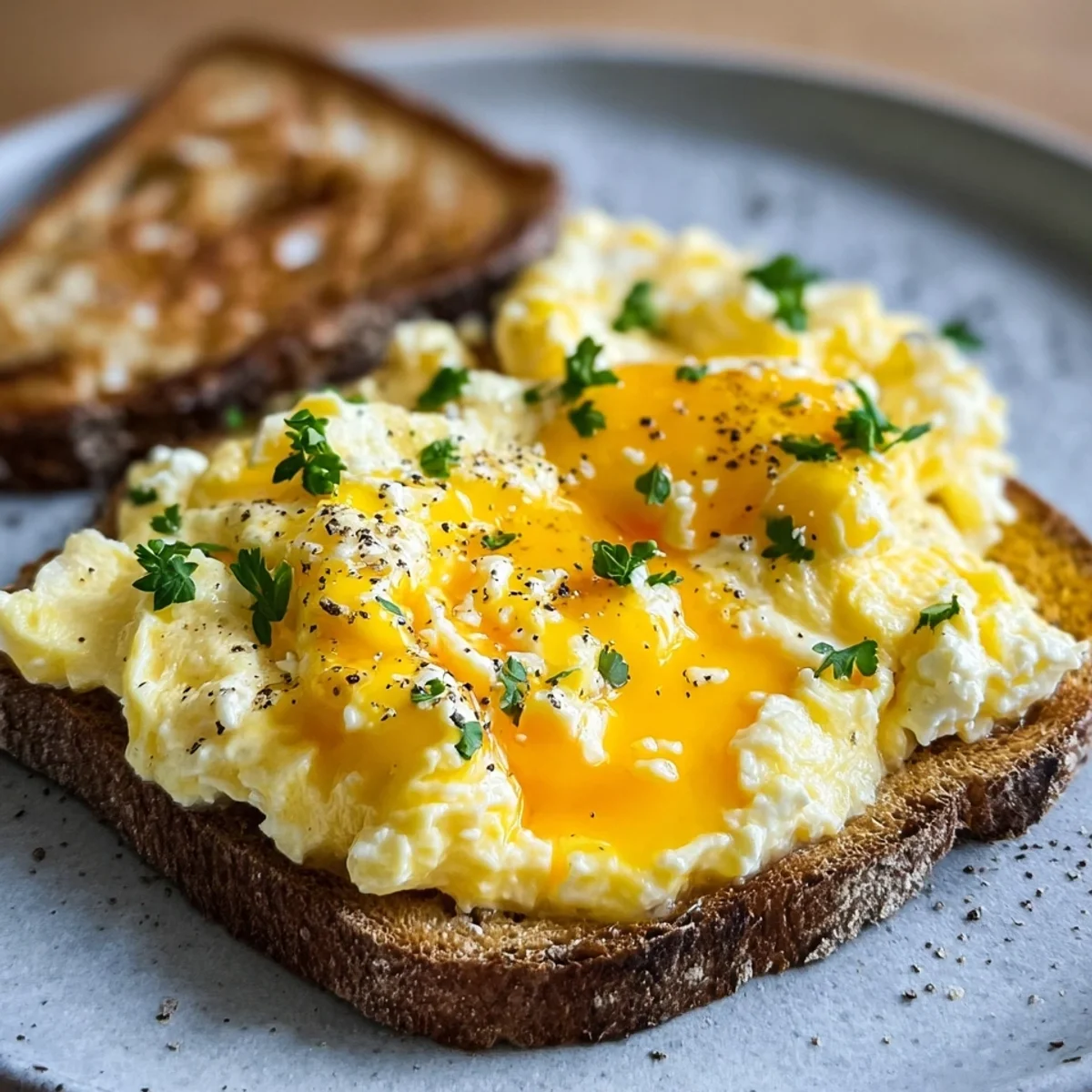
Start your day with creamy scrambled eggs boosted with cottage cheese. This high-protein breakfast is quick, easy, and satisfying for a healthy morning meal.
Okay, so picture this: it's a hectic Tuesday morning, I'm running on fumes, and my usual toast just isn't cutting it. I needed something quick, satisfying, and packed with protein. That's when I stumbled upon the magic of adding cottage cheese to my eggs. Honestly, it was a game-changer! What started as a "let's see what happens" moment turned into my go-to for the most incredibly Creamy Scrambled Eggs. You're going to love this, I promise!
I remember the first time I tried this, I got a little too excited and added way too much cottage cheese. Oops! My "Creamy Scrambled Eggs" turned into more of a cottage cheese scramble with a hint of egg. It was still tasty, but for sure not the texture I was going for. Live and learn, right? Now I stick to the recipe, and it's perfection every time.
Ingredients for the Ultimate Creamy Scrambled Eggs
- 3 large eggs: These are the stars of the show, hon! I always go for good quality, free-range eggs if I can. They just have a richer yolk and better flavor, which totally shines through in your Creamy Scrambled Eggs. Don't worry too much about temperature, straight from the fridge is fine. Just crack 'em with confidence and get ready for some eggy goodness!
- 1/2 cup low-fat cottage cheese (4% milkfat): Alright, here's our secret weapon for that incredible creaminess! I've tried all sorts, but 4% milkfat cottage cheese gives the best texture not too watery, not too dry. It melts down beautifully, adding a subtle tang and a protein punch without making your eggs taste like cottage cheese. Trust me, even if you're not a huge fan on its own, it works wonders here.
- 1 tsp unsalted butter: Butter is non-negotiable for me when it comes to eggs. It adds this lovely richness and helps prevent sticking, giving your Creamy Scrambled Eggs that beautiful, glossy finish. I prefer unsalted so I can control the seasoning myself, but if salted is all you have, just adjust your added salt a tiny bit. Don't skimp on this golden goodness!
- 1 tbsp whole milk: A little splash of whole milk might seem small, but it helps loosen the egg mixture just enough to create those soft, tender curds. It's like a tiny insurance policy against dry, rubbery eggs. You can use half-and-half for an even richer result, but whole milk is my go-to for a perfect balance without making it too heavy.
- 1/4 tsp kosher salt, 1/8 tsp freshly ground black pepper, 1/8 tsp garlic powder: Seasoning is EVERYTHING! Kosher salt gives you better control than table salt, and freshly ground black pepper? Game changer. That little bit of garlic powder? It's my secret ingredient for adding a subtle savory depth that makes these Creamy Scrambled Eggs sing. Don't skip it, it really elevates the flavor without being overpowering.
- 1 tbsp finely chopped fresh chives, 1/4 tsp smoked paprika, Pinch of red pepper flakes (optional): These are the finishing touches that make your breakfast pop! Fresh chives add a mild oniony freshness and a gorgeous pop of color. Smoked paprika brings a warm, earthy, slightly smoky note that I just adore. And those red pepper flakes? If you like a little kick, go for it! They all contribute to a balanced, flavorful plate.
Whipping Up Your Creamy Scrambled Eggs: The How-To Guide
- Step 1: Prep Egg Mixture:
- First things first, grab a medium bowl and crack those beautiful eggs right in. Now, add your whole milk, kosher salt, black pepper, and garlic powder. Whisk it all together with a fork or a small whisk until the yolks and whites are fully combined and it's a nice pale yellow. You want it frothy, but not super airy this preps the eggs for that ultimate creamy texture we're aiming for. This is the foundation for your perfect Creamy Scrambled Eggs!
- Step 2: Heat Pan & Butter:
- Next, get your favorite non-stick skillet over medium-low heat. Seriously, low and slow is the secret here. Toss in that unsalted butter and let it melt gently, swirling it around to coat the bottom of the pan. You want it shimmering, but not browning at all. A perfectly buttered, gently heated pan is crucial for preventing sticking and ensuring your Creamy Scrambled Eggs cook evenly and softly.
- Step 3: Add Egg Mixture:
- Once your butter is melted and the pan is perfectly warm not smoking, just warm pour your egg mixture right in. Don't stir it yet! Let it sit for about 30 seconds to a minute, just until the edges start to set slightly. You'll see a thin film forming around the perimeter. This initial 'set' is key to getting those lovely large, soft curds for your Creamy Scrambled Eggs.
- Step 4: Gently Scramble Eggs:
- Now for the fun part! Grab a rubber spatula and gently push the cooked egg from the edges towards the center, tilting the pan to let the uncooked egg flow underneath. Keep doing this, slowly, without frantic stirring. It's all about patience. You're creating soft, custardy curds. Keep the heat low, and don't rush it. You want them almost set but still a little wet on top that's how you get truly Creamy Scrambled Eggs.
- Step 5: Fold in Cottage Cheese:
- When the eggs are about 80% cooked still a bit moist and shiny but not runny take the pan off the heat. This is important! Now, gently fold in your cottage cheese. The residual heat will warm it through and help it melt into the eggs, giving you that incredible, creamy texture without overcooking them. Stir in your smoked paprika and red pepper flakes now too. This step transforms them into the best Creamy Scrambled Eggs you'll ever taste.
- Step 6: Serve & Garnish:
- Alright, you're almost there! Immediately transfer your gorgeous, fluffy eggs to a warm plate. Seriously, don't let them sit in the hot pan, or they'll keep cooking and lose that perfect texture. Sprinkle generously with fresh chives. A little extra smoked paprika on top looks pretty and adds another layer of flavor. Take a moment, admire your handiwork, and get ready to devour these incredible Creamy Scrambled Eggs. Enjoy!
Cooking these Creamy Scrambled Eggs is such a joy for me. It’s a quiet morning ritual, a moment of calm before the day kicks off. There’s something so meditative about gently stirring the eggs, watching them transform into those soft, pillowy curds. It’s a simple pleasure, but it brings so much comfort and satisfaction to my kitchen.
Keeping Your Creamy Scrambled Eggs Fresh: Storage Secrets
Okay, so let's be real, Creamy Scrambled Eggs are best fresh, straight from the pan. That super creamy texture is hard to replicate after a chill. But if you do have leftovers (which is rare in my house, honestly!), you can store them in an airtight container in the fridge for up to 2 days. I wouldn't push it past that, the texture really starts to suffer. Reheating can be tricky, I usually go for a gentle zap in the microwave, stirring halfway, or a quick warm-up in a non-stick pan over very low heat. Just be careful not to overcook them, or they'll get rubbery. I once tried freezing them, and oops, that was a disaster! Just don't.

Swapping Ingredients for Your Creamy Scrambled Eggs
I've had my fair share of substitution experiments with these Creamy Scrambled Eggs, let me tell you! If you don't have whole milk, a splash of half-and-half or even a tablespoon of heavy cream would make them even richer though maybe not as 'low-fat'. For the cottage cheese, I've tried ricotta in a pinch, and it works, but the texture is a bit different, more uniform. Not quite the same magic. As for herbs, dill or parsley are lovely if you're out of chives. And if you’re not into smoked paprika, regular paprika or even a dash of cayenne for heat works. Just play around and see what you love!
Serving Up Creamy Scrambled Eggs with a Smile
Oh, the possibilities for serving these Creamy Scrambled Eggs are endless, my friend! My absolute favorite way is piled high on a slice of toasted sourdough with a smear of avocado. Talk about a complete breakfast! They're also fantastic alongside some crispy bacon or a couple of savory breakfast sausages. For a lighter meal, serve them with a simple side salad dressed with a bright vinaigrette. And honestly, sometimes I just eat them straight out of the pan with a fork. No judgment here! Don't forget a hot cup of coffee or tea to complete the picture. Pure breakfast bliss!
The Journey Behind Creamy Scrambled Eggs
Scrambled eggs, in general, have been a breakfast staple across cultures for centuries, evolving from simple pan-fried eggs to the fluffy, custardy versions we adore today. While adding dairy for creaminess isn't new think French 'oeufs brouillés' with cream or butter the specific addition of cottage cheese for Creamy Scrambled Eggs is a more modern, health-conscious twist, especially popular in American home kitchens. It's a brilliant hack to boost protein and achieve that luxurious texture without relying solely on heavy creams. It's less about ancient traditions and more about smart, delicious home cooking innovation!
And there you have it, my friend! Your new favorite breakfast, those super amazing Creamy Scrambled Eggs. I hope you love them as much as I do. It’s a simple recipe, but it brings so much joy to the morning. Give it a try, snap a pic, and let me know in the comments how your protein-packed breakfast turned out. Happy cooking!

FAQs About Making Creamy Scrambled Eggs
- Can I use full-fat cottage cheese?
Oh, yes! Full-fat cottage cheese will work just as well, if not make your Creamy Scrambled Eggs even richer. I just prefer low-fat for my everyday breakfast, but honestly, either will give you that lovely creamy texture. Don't be shy, experiment a little!
- What if I don't have fresh chives?
No worries at all! Dried chives can work in a pinch, just use about half the amount. Or, you could swap them for finely chopped fresh parsley or dill for a different but equally delicious flavor. Even a sprinkle of onion powder can add a nice subtle hint if you're out of fresh herbs completely.
- My eggs are turning out rubbery, what am I doing wrong?
Oh no! This usually happens from cooking them too fast or too hot. Remember, low and slow heat is key! Also, make sure you're taking them off the heat when they're still a bit moist. They'll finish cooking off-heat, keeping them wonderfully soft and Creamy Scrambled Eggs.
- Can I add other vegetables?
Totally! I love adding finely diced bell peppers, spinach, or mushrooms. Just sauté them first until they're tender and any excess moisture has cooked off, then stir them into the eggs right before you add the cottage cheese. It's a great way to boost your veggie intake!
- Is this recipe good for meal prep?
Honestly, while these Creamy Scrambled Eggs are best fresh, you can meal prep them for a day or two. Just store them in an airtight container. Reheat gently in the microwave or a pan over low heat. The texture won't be quite as perfect, but they'll still be super tasty and protein-packed for a quick breakfast!
Creamy Scrambled Eggs with Cottage Cheese | Protein Breakfast
Start your day with creamy scrambled eggs boosted with cottage cheese. This high-protein breakfast is quick, easy, and satisfying for a healthy morning meal.
Ingredients
The Protein Powerhouse
- 3 large eggs
- 1/2 cup low-fat cottage cheese (4% milkfat)
Silky Scramble Base
- 1 tsp unsalted butter
- 1 tbsp whole milk
- 1/4 tsp kosher salt
- 1/8 tsp freshly ground black pepper
Aromatic Accents & Garnish
- 1 tbsp finely chopped fresh chives
- 1/4 tsp smoked paprika
- Pinch of red pepper flakes (optional)
- 1/8 tsp garlic powder
- 1 tsp extra virgin olive oil, for drizzling
- Small sprig of fresh parsley, for garnish (optional)
Instructions
-
1Prep Egg MixtureIn a medium bowl, whisk together 3 large eggs, 1 tbsp whole milk, 1/4 tsp kosher salt, and 1/8 tsp freshly ground black pepper until well combined and slightly frothy. This forms the essential base for your delicious Creamy Scrambled Eggs with Cottage Cheese | Protein Breakfast.
-
2Heat Pan & ButterPlace a non-stick skillet over medium-low heat. Add 1 tsp unsalted butter and allow it to melt completely, swirling the pan to ensure the bottom is evenly coated. This prevents sticking and adds a rich flavor.
-
3Add Egg MixturePour the whisked egg mixture into the heated skillet. Let the eggs sit undisturbed for about 30-60 seconds, allowing the edges to just begin to set. This initial gentle cooking is crucial for achieving a creamy texture.
-
4Gently Scramble EggsUsing a rubber spatula, gently push the cooked edges of the eggs towards the center of the pan, tilting the skillet to allow any uncooked egg to flow underneath. Continue this gentle folding motion until the eggs are mostly set but still slightly wet.
-
5Fold in Cottage CheeseRemove the skillet from the heat. Immediately fold in 1/2 cup low-fat cottage cheese (4% milkfat), 1/4 tsp smoked paprika, 1/8 tsp garlic powder, and a pinch of red pepper flakes (optional). The residual heat will gently warm the cottage cheese, creating the signature creaminess for your Creamy Scrambled Eggs with Cottage Cheese | Protein Breakfast.
-
6Serve & GarnishTransfer the Creamy Scrambled Eggs with Cottage Cheese | Protein Breakfast to a plate. Drizzle with 1 tsp extra virgin olive oil, sprinkle generously with 1 tbsp finely chopped fresh chives, and add a small sprig of fresh parsley (optional) for an aromatic finish.
Notes
For the creamiest scrambled eggs, always cook over low to medium-low heat and remove from the pan while they are still slightly wet. They will continue to cook from residual heat.
Feel free to customize your herbs! Fresh dill or cilantro can be lovely alternatives to chives. You can also use full-fat cottage cheese for an even richer texture.
Serve these protein-packed eggs immediately with a slice of whole-grain toast, a side of sliced avocado, or your favorite hot sauce for a complete and satisfying breakfast.
This dish is best enjoyed fresh. While leftovers can be stored in an airtight container in the refrigerator for up to 1 day, the texture may change slightly upon reheating.
Equipment
Please check ingredients for potential allergens and consult a health professional if in doubt.
Nutrition Facts
It is important to consider this information as approximate and not to use it as definitive health advice.
Comments
Leave a Comment